Plot 1096. Block 18, Sir Albert Cook Road



Access to Justice
Access to Justice
Access to Justice Project offers free legal services to Women in Conflict with the Law and trapped in the complicated criminal justice system.
Access To Justice Project was birthed in 2020 from Wells of Hope Women’s Safe Home which exists to help women being released from prison to navigate their re-entry journey smoothly by providing them free accommodation, meals, essential supplies, counselling services and Skills.
The overall goal of Access to Justice project is to enhance access to justice for women in conflict with the law in Uganda as a pathway to curb the Gender Based inequality faced by women, facilitate smooth reentry for women being released from prison and to reduce the impact of maternal incarceration on children.
OBJECTIVES
- Expand Access to justice for women by ensuring timely, affordable and gender responsive legal aid for women who are in conflict with the law.
- Promote fair and non- custodial justice outcomes- Reduce unlawful detention and advance for alternatives to incarceration for minor and non-violent offences.
- Project Dignity, Health and Reintegration-Safeguard human rights, integrate health services and support safe reintegration of women into communities.
THE TARGET BENEFICIARIES
- Women on death row.
- Women in prison serving long term sentences.
- Women in prison with babies.
- Women inmates that are sick especially those who are HIV/AIDS positive and mentally challenged!
Making a Case for Access to Justice for Women.
As Wells of Hope Women’s Safe home, whenever we go to the women prison to pick the released women from prison gate to bring them to the Women Safe Home, most of them say that that their biggest challenge while in prison was lack of Legal representation. This was because they could not
afford the necessary funds to pay for a private Attorney who could help them to follow up on their court files, advise them on the court cases and then represent them in courts of law.Working through the Formerly Incarcerated Women Association (FIWA) which was also birthed through The Women’s Safe Home we carried out a research on the bottle necks women in Uganda encounter while they try to access justice. FIWA has a total of over 42 women with new members joining every
month.
We underscored that even with existence of some charities that offer pro bono in the prison including the free lawyers’ government offer, women in Uganda continue to fail to access justice as compared to the men in prison. The women said that what was lacking is the existence of lawyers who could follow through regarding their matters in court, this included meeting and listening to them before they are represented, updating them on the progress of their matters and keeping in touch with them while the entire legal process of their matters takes place. It also required that the lawyers are able to track their files and work behind scenes to ensure justice prevails instead of waiting when they appear in court to deal with the matter. And this is the gap Wells of Hope Access to Justice Project was created to fill so as to ensure that under privileged women in Uganda are able to access justice easily and smoothly. Through FIWA and also learning from the first residents we got at the Women’s Safe Home; we came to learn that many women in prison lack Access to Justice services mainly because women are the most vulnerable and marginalized group in our community. Most of the women in prison are poor, illiterate and lack esteem to stand and defend themselves and as such suffer a lot of injustices as compared to their male counterparts. The lack of legal representation stifles women’s reentry journey by making their date of release from the prison indefinite and also may lead to reoffending if they are not provided legal support to diffuse challenges they may meet upon release from prison such as custody of their children or repossession of their property that had been left behind at the time when they were incarcerated. In addition to that, we also learned that upon release most of the Women had too many legal challenges and if the challenges are not handled earlier, it would lead them back to prison. Therefore, through the Access to Justice Project we have been able to render legal assistance to these women even upon release from prison especially while they are still residents at Wells of Hope Women’s Safe Home.
DESCRIBING ACCESS TO JUSTICE ACTIVITIES
Some of the women released from prison are either people who have been convicted for having committed capital offences such as murder, aggravated trafficking, aggravated robbery and the society they live in considers them to be outcasts due to the nature of crimes committed. For a woman to commit such crimes she is considered to be abominable as compared if it was a man to commit such a crime. For such a woman it becomes very difficult to transition back into the community because she is already ostracized and not wanted and would face risk of being abused, violently beaten or even killed. In such cases The Access to Justice lawyer helps the women to transition into their communities by talking to the Officers responsible such as the law enforcement officers (Police Officers), the area Local Council 1, the Resident District Commissioner and the communities to accept them back. Therefore,without our legal support they are likely to suffer violence from the community or even commit crimes that could lead them back to prison. There have been instances where formerly incarcerated women have been denied access to their children, but through the Access to Justice project we have helped women reunite with their children. Recovery of Property: When women go to prison their property is either lost, confiscated or is stolen while they are gone but through the Access to Justice Project, the women are offered legal support so as to recover their properties. Access to Justice Project helps to ensure legal compliance of the Women’s Safe home related work, a point in case was the registration of FIWA as a Community Based Organization. The Access to Justice Project also offers the women in prison and those who have been released awareness and sensitization on the various laws and how to abide by the laws so as to prevent them from committing crimes and going back to prison. This helps to cut on women recidivism rates! The Access to Justice lawyer supports the FIWA Ladies on the Loan and Savings Scheme where by legal documents are drafted such as loan agreements, policies and this helps them in the management of their day-to-day duties in their scheme. We carry out Prison Visits Fortnightly where we are able to Meet the women in prison who need legal assistance and fall under the project. We are also able to meet women who are about to be released, and in preparing them to come to the Safe Home, we are able to learn and deal with any legal issue that they may have and may hinder their successful reentry. We provide Legal Aid and Support to women in Prison through legal representation and appearance in Courts of Law and Plea bargain. We provide Legal Counsel to Formerly Incarcerated Women Association (FIWA) Members. Through the Access to Justice Project the formerly incarcerated Women are provided advocacy classes and how to fight for their rights while out of prison. These classes enable them to mobilize and build power in their communities. The women discuss the challenges they face and come up with solutions to solve them.
The General Activities include:
- Prison Visits: Meet the women who need legal assistance and fall under the project then conduct client interviews.
- Legal Counsel to FIWA Members.
- Legal Aid and Support to women in Prison through legal representation and appearance in Courts of Law and Plea bargain.
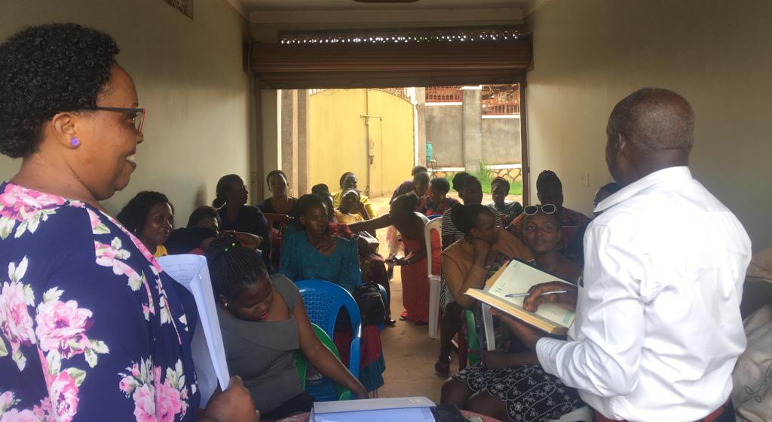
- Advocacy which is done through organising meetings with the Formerly Incarcerated Women. The meetings enable them to mobilise and build power in their communities. The women discuss the challenges they face and come up with solutions to solve them.
- Offering legal advice to Formerly Incarcerated Women!
- Drafting legal documents i.e. court documents, loan agreements and policies
- Following up on cases with the Courts of Law.
- File tracing in Courts of Law
- Helping the ladies recover their properties (Legal Support upon release from Prison).
- Collaboration and Partnerships with other legal aid service providers.
- Contacting relatives of incarcerated women to stand in as sureties in court.
- Mediations
- Legal research.
- Filling documents in courts of law.
ACHIEVEMENTS OF THE ACCESS TO JUSTICE PROJECT
- We were able to provide legal representation for women affected by incarceration and this was done through helping them navigate the legal issues related to their cases such as court hearings, court follow ups, file tracing and other court proceedings. SO far a total of 16 women have benefitted from this and they are out of prison and are re-united with their families.
- Legal Education and Empowerment: We have Offered legal education to a total number of 42 formerly incarcerated women by empowering them to make informed decisions and advocate for themselves.
- Offered support for victims of violence: Provided legal support to the women who were victims of domestic violence by helping them navigate the criminal justice system. 3 ladies benefited from this
- Advocated for the rights of women impacted by incarceration, ensuring that their legal needs were met. 42 FIWA members benefitted from the program.
- Family Reunification: Assisted in the legal processes that facilitated family reunification, including child custody cases, visitation rights and support for re- establishing parental rights.
- Collaboration with other services: Enhanced collaboration with other service providers to offer comprehensive support to women.
SPECIFIC IMPACT
- 4 Women were realized from prison after successful completion of their cases at court, these included Mariam (her Co-accused is male and benefited from the legal project whereby he was able to receive lower sentence of 3 years for defilement and aggravated trafficking charges).
- 1 lady was acquitted of murder charges and she was released from prison and has now re-united with her children and family.
- 10 incarcerated women (on plea bargain) received legal advice on their cases while in prison.
- 1 lady was released on bail for aggravated trafficking charges and she reunited with her son who was receiving educational support from Wells of Hope, she continually reports to court wait for the prosecution to collect evidence on her case.
- 10 Women have their cases ongoing in different Courts of Law
- 1 woman was sentenced and she is now serving her jail term.
- 1 woman was helped to recover property after serving a sentence of 8 years and she was released.
- 1 woman was also helped to recover her property from the Landlord after being released from prison and serving her sentence.
Success story
Access to Justice and Family Reunification
In 2023 Teresa and Margret were remanded to Luzira Women’s Prison on murder charges, while a minor co- accused was placed in a children’s remand home. Through the access to Justice Project for Women in Conflict with the Law, Wells of Hope Ministries provided legal representation and continuous case follow up, ensuring their case was committed to the High Court and heard without further delay.
In June 2025, following a plea bargain process, both women were sentenced to time served (1 year and 9 months) and released from prison which was the time they spent on remand. They were able to reunite with their children and families and are now members of the Formerly Incarcerated Women Association (FIWA) under the Wells of Hope Women’s Safe Home Project. Wells of Hope is also supporting the education of three of their children.
This intervention demonstrates how timely legal aid and post release support restores dignity, protect families and delivers justice for women who are in conflict with the law.